Brakes Feel Uneven When Stopping: Causes and Fixes
If your brakes feel uneven when stopping, it usually means that braking force is not being applied consistently across the wheels. Instead of a smooth, controlled stop, the car may feel like it slows down in waves, shifts slightly, or reacts differently each time you press the pedal. This can make braking feel unpredictable and less controlled, especially at higher speeds.
This issue can overlap with other brake problems such as pulsation or pulling, but the key difference is the overall inconsistency. The car may not always pull in one direction, and the brake pedal may not always pulse the same way. Instead, the braking experience feels uneven or inconsistent from stop to stop.
Most of the time, this problem is caused by uneven wear in the braking system or inconsistent pressure being applied to the wheels. Addressing it early can prevent further damage and restore smooth, reliable braking performance.
What this problem usually feels like
Uneven braking often feels like the car is not slowing down evenly. You may notice slight shifts in the vehicle’s balance as you brake, or a feeling that one side is engaging more than the other, even if it does not pull strongly in one direction.
Some drivers describe it as a rough or inconsistent stop, where the car seems to grab at certain points and release at others. Others notice that the brake pedal feel changes slightly with each press.
This issue may be more noticeable at moderate to high speeds, but it can also appear during slow stops, especially if the problem has progressed.
What causes uneven braking?
Uneven rotor wear
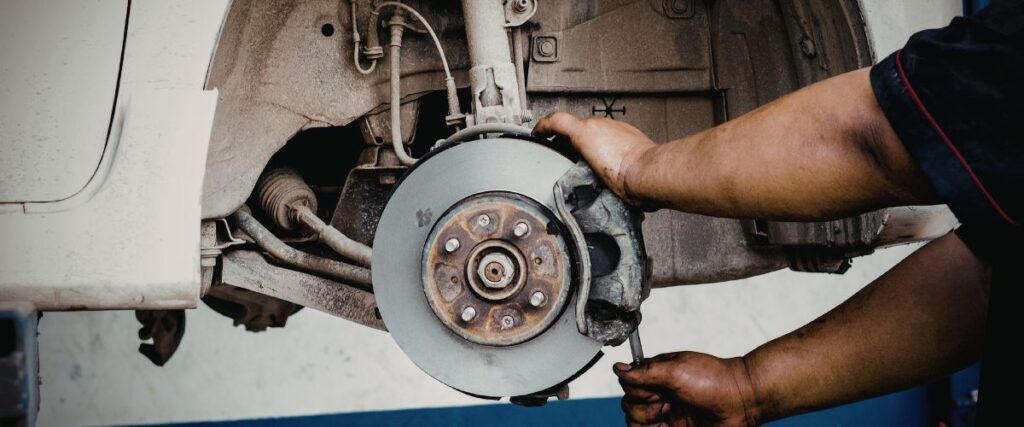
Brake rotors must be smooth and even to provide consistent braking. If one rotor is worn differently than the others, it can create inconsistent braking force. This can feel like uneven stopping rather than a clear vibration or pull.
Over time, heat and wear can cause slight variations in thickness, leading to inconsistent contact with the brake pads.
Uneven brake pad wear
If brake pads wear unevenly across the vehicle, braking force will vary from wheel to wheel. This can create an inconsistent stopping feel, especially if one side has significantly more wear than the other.
This is often linked to caliper issues or improper installation.
Brake caliper imbalance
If calipers are not applying equal pressure, braking force will not be evenly distributed. This can result in uneven stopping, even if the car does not strongly pull to one side.
Caliper problems may include sticking pistons or uneven movement.
Brake fluid inconsistencies
Brake fluid transfers pressure through the system. If the fluid is old, contaminated, or unevenly distributed, it can lead to inconsistent braking performance.
Air in the system can also contribute to uneven pressure.
Suspension and tire factors
Worn suspension components or uneven tire wear can make braking feel less stable. While these issues may not directly cause uneven braking, they can amplify it and make it more noticeable.
How to diagnose the issue yourself
You can identify patterns in how the car behaves to narrow down the cause.
- Notice if braking feels different each time you stop
- Check for uneven tire wear
- Pay attention to pedal feel and responsiveness
- Look for signs of vibration or pulling
- Consider recent brake work or maintenance
If the issue feels inconsistent rather than directional or rhythmic, it is likely related to uneven wear or pressure distribution.
How to fix the problem
Replace brake rotors
If rotors are uneven, replacing them restores a smooth braking surface and consistent stopping performance.
Replace brake pads in pairs
Brake pads should always be replaced evenly across both sides of the vehicle to ensure balanced braking.
Inspect and repair calipers
If calipers are not applying equal pressure, they may need to be repaired or replaced.
Flush and replace brake fluid
Fresh brake fluid ensures consistent hydraulic pressure and improves braking performance.
Inspect suspension and tires
If the problem persists, checking suspension components and tire condition can help identify contributing factors.
How this problem gets worse over time
Uneven braking typically becomes more noticeable as wear increases. Differences in rotor thickness and pad condition grow over time, making braking feel more inconsistent.
This can lead to additional wear on the braking system and reduced overall performance. If left untreated, it may develop into more obvious issues such as pulling or pulsation.
Why this is a safety issue
Inconsistent braking reduces predictability, which is critical for safe driving. When braking performance varies, it becomes harder to control stopping distance and maintain stability.
This is especially important during emergency stops or in wet conditions, where consistent braking is essential.
Is it safe to drive?
If the issue is mild, the car may still be drivable for short distances. However, it should not be ignored. Uneven braking can worsen quickly and lead to more serious problems.
If braking feels unpredictable or inconsistent, the car should be inspected as soon as possible.
When to see a mechanic
- Braking feels inconsistent or unpredictable
- The issue is getting worse over time
- You notice uneven wear on brakes or tires
- The car begins to pull or vibrate
- Braking performance decreases
Estimated repair cost
- Brake rotors: $200 to $600
- Brake pads: $100 to $300
- Brake fluid flush: $100 to $200
- Caliper repair: $150 to $400
How to prevent this issue
- Replace brake pads evenly
- Inspect rotors regularly
- Maintain proper brake fluid levels
- Address small braking issues early
Common mistakes people make
- Ignoring inconsistent braking feel
- Replacing only one side of the brakes
- Skipping routine maintenance
- Waiting until the issue becomes severe
How this differs from other braking issues
- Uneven braking = inconsistent stopping feel
- Pulsation = rhythmic vibration
- Pulling = directional drift
- Soft pedal = pressure issue
Quick summary
- Uneven braking is caused by inconsistent pressure or wear
- Rotors, pads, and calipers are common causes
- The issue can worsen over time
- Fixing early improves safety and control