Car Stutters When Accelerating: Causes and Fixes
If your car stutters when accelerating, it means the engine is not delivering power smoothly. Instead of a steady increase in speed, the vehicle may feel like it is briefly losing power, catching, and then continuing forward. This creates a jerky or uneven driving experience that can be frustrating and, in some situations, unsafe.
Stuttering is often related to interruptions in the combustion process. The engine depends on the correct balance of air, fuel, and spark. When one of these elements is not delivered consistently, the engine cannot maintain smooth power output.
This issue can happen at low speeds, during normal driving, or under heavy acceleration. In some cases, it may only appear occasionally. In others, it becomes more frequent as the underlying problem worsens.
What this problem usually feels like
When you press the gas pedal, the car does not accelerate smoothly. Instead, it feels like the engine is hesitating in small bursts. You may feel a series of slight jerks or interruptions as the car tries to gain speed.
The stuttering can be mild at first, especially at low speeds. As the issue progresses, it may become more noticeable and occur more frequently. In some cases, it can feel similar to hesitation but with repeated interruptions rather than a single delay.
This issue is often most noticeable when accelerating from a stop or when trying to increase speed quickly.
What causes a car to stutter when accelerating?
Fuel delivery problems
If the engine is not receiving a steady supply of fuel, it can cause interruptions in combustion. This may be due to clogged fuel injectors, a weak fuel pump, or a restricted fuel filter.
When fuel delivery is inconsistent, the engine may briefly lose power before recovering, creating a stuttering effect.
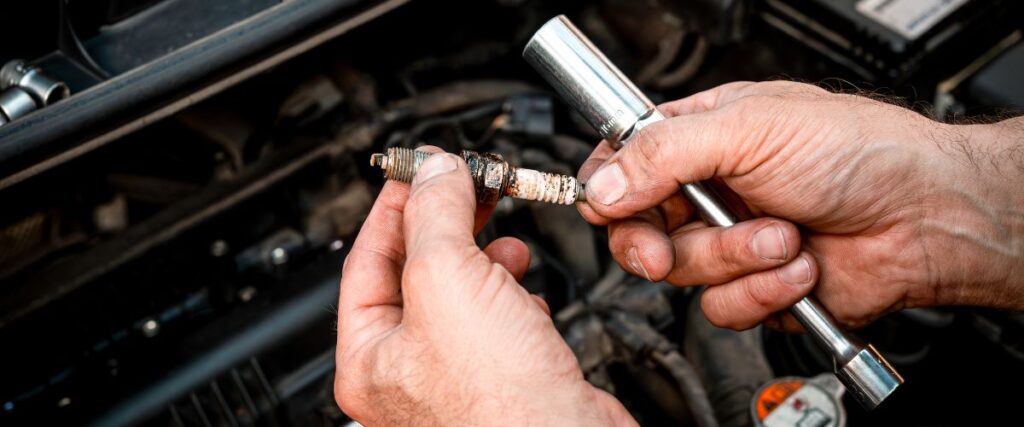
Faulty spark plugs or ignition coils
Spark plugs and ignition coils are responsible for igniting the air-fuel mixture. If they are worn or malfunctioning, they may not fire consistently. This leads to incomplete combustion and uneven power delivery.
This is one of the most common causes of stuttering.
Dirty or malfunctioning mass airflow sensor
The mass airflow sensor helps regulate the air-fuel mixture. If it provides incorrect readings, the engine may not receive the proper balance of air and fuel, leading to inconsistent combustion.
Throttle body buildup
The throttle body controls airflow into the engine. If it becomes dirty, it can restrict airflow and cause inconsistent engine response during acceleration.
Vacuum leaks
Vacuum leaks allow unmetered air into the engine. This disrupts the air-fuel mixture and can cause the engine to run unevenly, especially during acceleration.
Transmission issues
In some cases, stuttering may be related to the transmission. If the transmission is not shifting smoothly, it can create a jerky acceleration experience that feels like engine stuttering.
How to diagnose the issue yourself
You can identify patterns in the stuttering to help determine the cause.
- Notice when the stuttering occurs, such as from a stop or at higher speeds
- Check if it happens consistently or only occasionally
- Pay attention to any warning lights
- Listen for unusual engine sounds
- Consider recent maintenance or fuel quality
If the issue is consistent and occurs under acceleration, it is often related to fuel or ignition. If it happens during gear changes, it may be transmission-related.
How to fix the problem
Clean or replace fuel injectors
Cleaning or replacing injectors can restore proper fuel delivery and eliminate stuttering.
Replace spark plugs and ignition coils
New ignition components ensure consistent combustion and smoother acceleration.
Clean the mass airflow sensor
Cleaning the sensor can restore accurate readings and improve engine performance.
Clean the throttle body
Removing buildup improves airflow and helps stabilize engine response.
Repair vacuum leaks
Fixing leaks restores the correct air-fuel mixture and eliminates uneven performance.
How this problem gets worse over time
Stuttering often becomes more frequent as the underlying issue worsens. Fuel system problems can lead to more severe performance issues. Ignition problems can cause misfires, which may damage engine components over time.
If left untreated, stuttering can lead to reduced fuel efficiency, increased emissions, and more expensive repairs.
Why this is a safety issue
Stuttering can make acceleration unpredictable. This is especially dangerous when merging into traffic or passing other vehicles. A lack of smooth power delivery can reduce your ability to respond quickly.
Is it safe to drive?
If the stuttering is mild and occasional, the car may still be drivable. However, it should be inspected soon. If the issue is severe or worsening, it is best to avoid driving until it is fixed.
When to see a mechanic
- The stuttering is frequent or worsening
- The engine misfires
- A warning light appears
- The car loses power during acceleration
- Fuel efficiency decreases
Estimated repair cost
- Fuel injector cleaning: $100 to $300
- Spark plug replacement: $100 to $300
- Ignition coil replacement: $150 to $400
- Throttle body cleaning: $100 to $250
How to prevent this issue
- Use high-quality fuel
- Maintain ignition components
- Clean sensors regularly
- Address small issues early
Common mistakes people make
- Ignoring early stuttering
- Using poor-quality fuel
- Skipping maintenance
- Assuming the issue will go away
How this differs from other acceleration issues
- Stuttering = repeated interruptions in power
- Hesitation = delayed response
- Jerking = sudden movement
- Power loss = reduced output
Quick summary
- Stuttering is caused by inconsistent combustion
- Fuel and ignition issues are common causes
- The problem can worsen over time
- Fixing early restores smooth acceleration