Grinding Noise When Braking: Causes and What to Do
If you hear a grinding noise when braking, it usually means something in your braking system needs immediate attention. Unlike squeaking or minor vibrations, grinding is often a sign of metal-on-metal contact, which can quickly damage your brakes and make your car unsafe to drive.
This issue can start suddenly or develop over time. In some cases, it happens after brake pads wear down completely. In others, debris or rust can cause the noise. Understanding what is causing the grinding can help you fix it early and avoid more expensive repairs. If you are hearing grinding, it is important to act quickly. This is one of the few brake issues that almost always gets worse the longer it is ignored.
What this problem usually sounds like
A grinding noise when braking is usually loud and harsh. It may sound like metal scraping or rubbing together. Some drivers describe it as a deep grinding or crunching noise that happens every time they press the brake pedal.
The sound may be consistent or only happen at certain speeds. In more severe cases, the noise becomes louder over time as more damage occurs.
If the grinding is coming from one wheel, you may also feel a slight pull when braking or notice uneven stopping performance.
What causes grinding noise when braking?
Worn brake pads
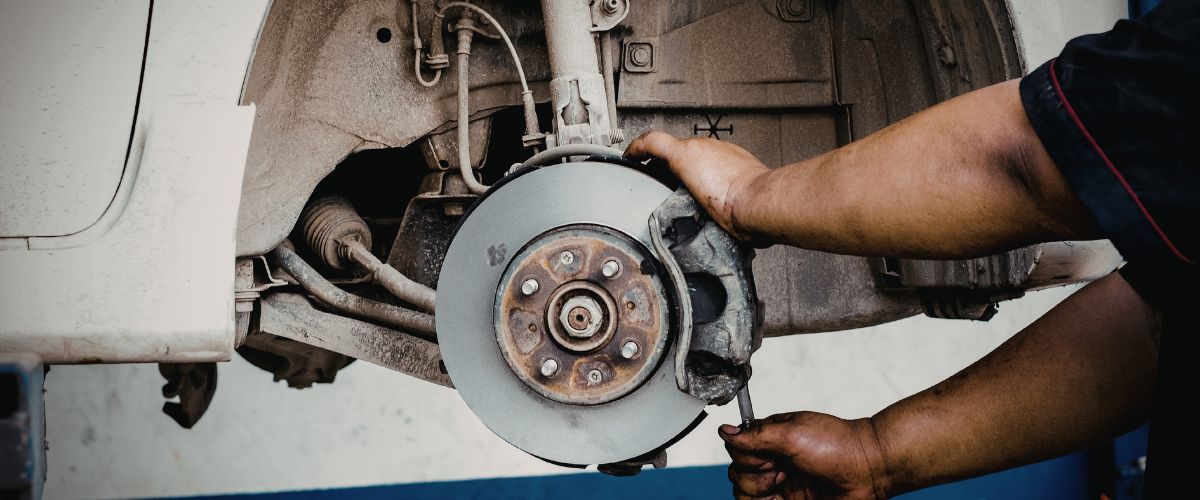
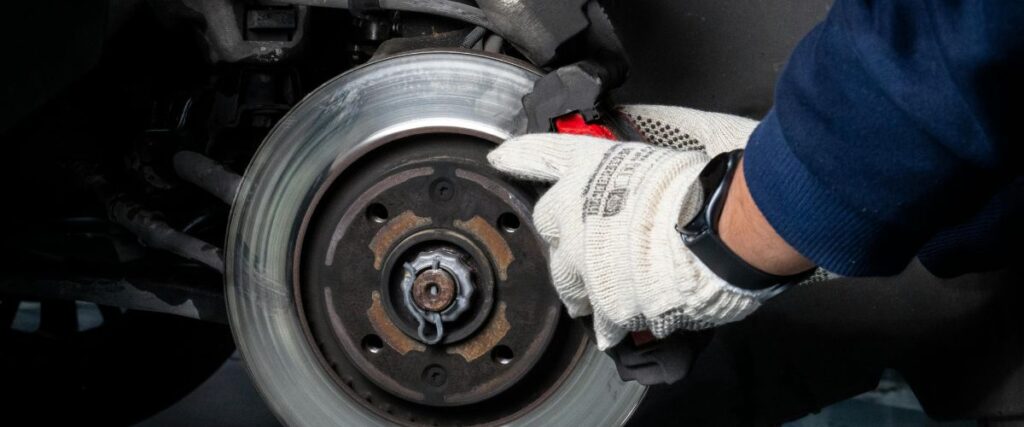
The most common cause is worn brake pads. Brake pads have a friction material that wears down over time. Once that material is gone, the metal backing plate presses directly against the rotor.
This creates a grinding noise and can quickly damage the rotor surface.
Debris stuck in the brake system
Small rocks, dirt, or debris can sometimes get caught between the brake pad and rotor. This can create a grinding or scraping sound, especially when braking at low speeds.
In some cases, the noise may go away on its own if the debris falls out, but it can also cause scratches on the rotor.
Rust or corrosion on rotors
If your car has been sitting for a while, rust can build up on the brake rotors. Light rust usually clears off after a few stops, but heavier corrosion can cause grinding noises.
This is more common in humid or wet environments.
Worn or damaged brake components
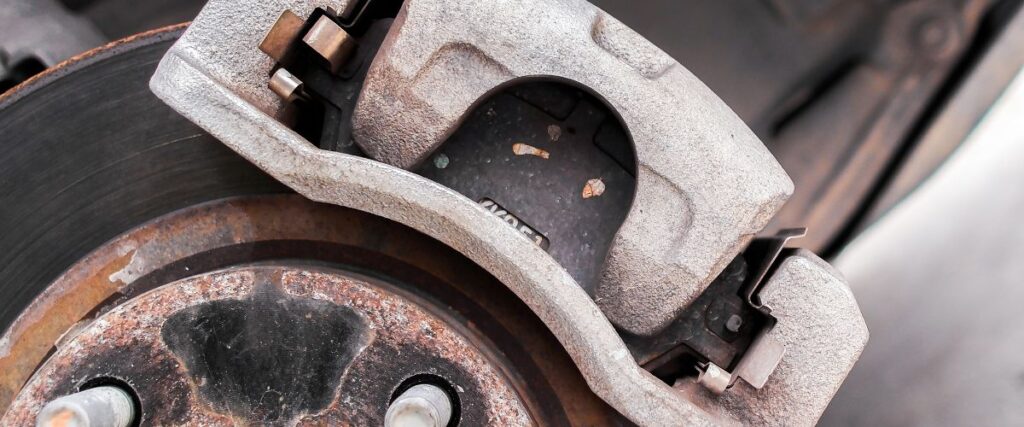
Other parts of the braking system, such as calipers or hardware, can also wear out. If these components are not functioning properly, they can cause uneven pressure and lead to grinding sounds.
How to diagnose the issue yourself
You can often identify the cause of grinding by paying attention to when and how the noise happens.
- Listen for grinding only when braking
- Check if the noise is coming from one wheel or multiple
- Notice if the sound started suddenly or gradually
- Look for reduced braking performance
- Check for warning lights on your dashboard
If the noise is loud and consistent, worn brake pads are the most likely cause. If the noise appeared suddenly after driving on gravel or dirt roads, debris may be the issue.
How to fix grinding brakes
Replace brake pads
If the pads are worn down completely, they need to be replaced immediately. Continuing to drive will damage the rotors and increase repair costs.
Replace or resurface rotors
If grinding has already damaged the rotors, they may need to be resurfaced or replaced. Deep grooves usually require full replacement.
Remove debris
If debris is causing the noise, it may need to be removed manually. In some cases, driving slowly and braking gently can dislodge it, but inspection is recommended.
Inspect brake system components
If the problem is not obvious, a mechanic should inspect calipers, hardware, and other parts of the braking system.
What happens if you ignore grinding brakes
Ignoring grinding noise can lead to severe damage. Once the brake pads are gone, the metal backing plate grinds into the rotor, causing deep grooves.
This can reduce braking performance, increase stopping distance, and make your car unsafe to drive.
What starts as a simple brake pad replacement can turn into a more expensive repair involving rotors and additional components.
Is it safe to drive?
No. Grinding brakes are a sign that your braking system is no longer functioning properly. While the car may still stop, braking performance is reduced and damage is ongoing.
You should avoid driving the car until the issue is inspected and repaired.
When to see a mechanic
- The grinding noise is loud and constant
- Braking performance has decreased
- The car pulls when braking
- You feel vibration along with grinding
- The noise does not go away after driving
Estimated repair cost
- Brake pads: $100 to $300
- Brake rotors: $200 to $600
- Full brake job: $300 to $900
Common mistakes people make
- Continuing to drive after hearing grinding noise
- Ignoring early warning signs like squeaking
- Replacing only pads when rotors are already damaged
- Assuming the noise will go away on its own
How to prevent grinding brakes
- Replace brake pads before they wear out completely
- Have your brakes inspected regularly
- Avoid harsh braking when possible
- Listen for early warning noises like squeaking
How this problem gets worse over time
Grinding brakes do not stay the same. Once the brake pad material is gone, the metal backing plate begins wearing into the rotor every time you brake. This damage builds quickly, even over a few short drives.
At first, the noise may only happen occasionally. Then it becomes constant. After that, braking performance starts to drop, and stopping distances increase. In more severe cases, the rotor can become so damaged that it affects wheel alignment and overall control.
The longer you wait, the more parts are affected. What could have been a simple brake pad replacement turns into a full brake job with rotors and possibly calipers.
Signs your brakes are already severely damaged
- Very loud grinding that does not stop
- Deep scraping sound even at low speeds
- Reduced stopping power
- Steering wheel vibration while braking
- Visible grooves or scoring on rotors
If you notice any of these signs, the damage has likely already progressed beyond just brake pads.
What grinding brakes feel like while driving
Grinding is not just something you hear. You can usually feel it as well. The brake pedal may feel rough or uneven, and you might notice resistance instead of smooth braking.
In some cases, the vibration travels through the steering wheel or floor of the car. This is a sign that the braking surface is no longer smooth and is making uneven contact.
Drivers often describe it as the car feeling “harsh” or “jerky” when slowing down.
Quick summary
- Grinding usually means brake pads are fully worn
- Metal-on-metal contact can damage rotors quickly
- Driving with grinding brakes is unsafe
- Fixing early prevents expensive repairs